
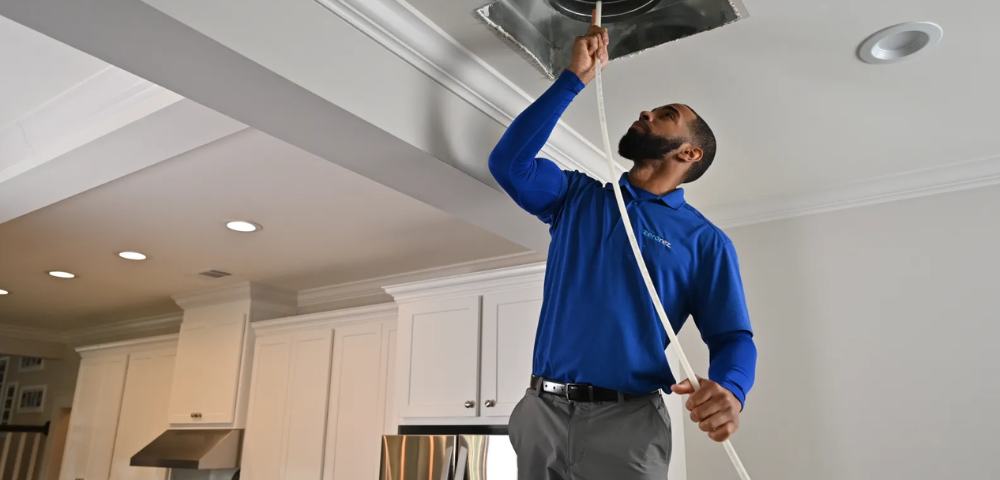
Your home’s HVAC system relies heavily on its ductwork to deliver conditioned air. Over time, these vital channels can develop issues like leaks, damage, or blockages. Deciding whether to pursue duct repair or opt for a full duct replacement is a crucial maintenance decision. Understanding the factors involved can help you make the most cost-effective and efficient choice for your home’s comfort and air quality.
Key points
- Assess the extent of damage to determine if duct repair or replacement is needed.
- Duct repair is a cost-effective solution for localized issues like small leaks or minor damage.
- Consider duct replacement for widespread damage, severe deterioration, or outdated systems.
- Regular air duct cleaning and dryer vent cleaning are crucial for home safety and efficiency.
- Professional services like air duct sanitizing and UV light installation can improve indoor air quality.
Assessing Ductwork Damage
Ductwork can suffer from various problems that impact HVAC performance. Leaks are a common issue, often caused by wear and tear at joints or punctures. These leaks allow conditioned air to escape into unconditioned spaces like attics or crawl spaces, leading to energy waste and uneven temperatures throughout your home. Punctures or tears can result from accidental damage during renovations or by pests. In older homes, insulation within ducts can degrade, reducing their effectiveness. Significant corrosion or mold growth within the ducts also presents a serious problem that affects indoor air quality.
The Case for Duct Repair
Duct repair is often a viable solution when the damage is localized and the overall integrity of the ductwork remains sound. Small leaks can frequently be sealed using specialized mastic or metallic tape designed for HVAC systems. Minor punctures can be patched, and damaged sections can sometimes be repaired in place. The primary advantage of choosing duct repair is typically cost savings compared to a full replacement. It’s also a less disruptive process. For issues like minor air leaks or small holes, repair can restore efficiency without the expense and labor of installing entirely new duct systems.
When Duct Replacement Becomes Necessary
There comes a point where duct repair is no longer the most sensible or cost-effective option. If your ductwork is extensively damaged, with widespread leaks, significant structural compromise, or severe corrosion, replacement is usually recommended. Older homes may have duct systems that are no longer suitable for modern HVAC efficiency standards or are made from materials that are now considered outdated or potentially hazardous. If the existing ductwork is undersized for a new, more powerful HVAC unit, replacement becomes essential for optimal performance. In cases of extensive mold contamination that cannot be remediated, a full replacement ensures a clean slate. Considering duct replacement also offers an opportunity to upgrade to more energy-efficient materials and designs.
Beyond Repair: Related HVAC Services
Maintaining your HVAC system involves more than just the ducts themselves. Regular air duct cleaning is essential for improving indoor air quality by removing accumulated dust, allergens, and debris. For homes with dryers, dryer vent cleaning is critical. Lint buildup in dryer vents is a significant fire hazard and also reduces dryer efficiency, leading to longer drying times and increased energy consumption. For enhanced air quality, consider services like air duct sanitizing, which can help eliminate microorganisms within the ductwork. Some systems benefit from UV light external installation, which can help control mold and bacteria growth within the air system.
Common questions
What are the signs my ductwork needs attention?
Signs that your ductwork needs attention include uneven temperatures between rooms, higher than usual energy bills, unexplained dust buildup, visible damage to ducts, or strange noises coming from your HVAC system. You might also notice a musty odor, which can indicate mold or mildew within the ducts.
How long does duct repair typically take?
The time required for duct repair can vary significantly depending on the extent of the damage. Minor repairs, such as sealing a few small leaks, might take only a few hours. More extensive repairs involving patching larger sections or replacing small, damaged segments could take a full day or longer.
Is duct repair more affordable than replacement?
Generally, duct repair is more affordable than a complete duct replacement. Repair addresses specific issues, making it a cost-effective solution for localized problems. However, if the damage is widespread or the ductwork is very old, the cumulative cost of multiple repairs might approach the cost of replacement, at which point replacement becomes the wiser long-term investment.
Can I clean my own air ducts?
While some very basic dusting might be possible for accessible vents, deep air duct cleaning and sanitizing are best left to professionals. Specialized equipment and techniques are needed to effectively remove debris from the entire duct system, ensuring improved air quality and preventing damage to the ducts.