
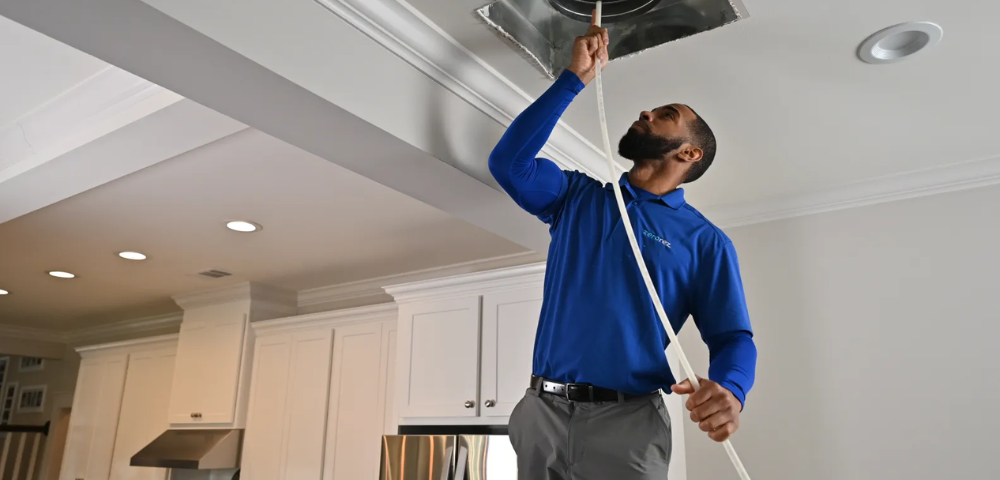
Your home’s heating and cooling system relies on a network of ducts to circulate air. Over time, these ducts can accumulate dust, debris, allergens, and other contaminants. Professional air duct cleaning is a service designed to remove these impurities, potentially improving indoor air quality and HVAC system performance. This guide demystifies what the air duct cleaning process truly involves.
Key points
- Air duct cleaning involves physically removing dust and debris from HVAC ducts.
- Specialized tools like vacuums and brushes are used to dislodge and capture contaminants.
- The process aims to improve indoor air quality and HVAC system performance.
- Related components such as the air handler and blower motor may also be cleaned.
- Sanitizing and UV light installation are often separate, optional services.
The Initial Assessment and Preparation
Before any cleaning begins, a professional technician will typically assess your HVAC system and ductwork. This involves visually inspecting the accessible areas of your ducts, often using specialized cameras, to identify the extent of contamination. They’ll look for dust buildup, mold growth, or any other obstructions. Based on this assessment, they can determine the most effective cleaning strategy. Preparation might involve sealing off vents in rooms that will not be cleaned to prevent dust from spreading and protecting your home’s surfaces with drop cloths. The main HVAC unit is usually shut down to prevent contaminants from circulating during the cleaning process.
Cleaning the Ducts: Tools and Techniques
The core of air duct cleaning involves physically removing debris from inside the ducts. Technicians use a variety of tools and methods. A common approach is to employ powerful vacuums and specialized brushes or agitating devices. These brushes, often attached to flexible rods, are inserted into the ducts to dislodge settled dust and particles. Simultaneously, the vacuum system, connected to the ductwork, captures the dislodged debris, preventing it from entering the living space. Negative air pressure is maintained throughout the process to ensure that dust and contaminants are contained and removed effectively. Different types of ducts, such as flexible or rigid, may require slightly different approaches or tools. For instance, a robotic device might be used for larger commercial duct systems.
Beyond the Ducts: Cleaning Related Components
A thorough air duct cleaning service often extends to other components of your HVAC system. This includes cleaning the air handler, blower motor, fan blades, and the evaporator coil. These parts can also harbor dust and moisture, contributing to poor air quality. While not always included in a standard package, some services may offer air duct sanitizing. This process uses EPA-approved disinfectants or antimicrobial treatments to kill mold, bacteria, and other microorganisms that may be present in the ductwork. Another related service is dryer vent cleaning, which addresses a separate, but equally important, ventilation system in your home.
Post-Cleaning Inspection and Recommendations
Once the cleaning is complete, technicians will typically perform a final inspection to ensure all accessible areas have been cleaned. They may also offer recommendations for maintaining your indoor air quality. This could include advice on filter replacement schedules, humidity control, or considering additional services like UV light external installation. These lights can be installed within the HVAC system to help kill airborne pathogens. While this service focuses on cleaning, understanding when duct repair or even duct replacement might be necessary is also part of maintaining a healthy HVAC system.
See our Air Duct Cleaning page for how Floridairprocleaning can help.
Common questions
What is the primary goal of air duct cleaning?
The primary goal of air duct cleaning is to remove accumulated dust, debris, allergens, and other contaminants from your HVAC system’s ductwork and related components, aiming to improve indoor air quality and potentially enhance system efficiency.
What tools are typically used during air duct cleaning?
Professionals commonly use powerful vacuums, specialized brushes attached to flexible rods, and sometimes robotic devices to dislodge and remove debris from within the ducts. Negative air pressure equipment is also crucial for containment.
Does air duct cleaning include sanitizing?
Air duct sanitizing is often an optional add-on service, not always included in standard cleaning. If performed, it involves applying EPA-approved disinfectants or antimicrobial treatments to kill microorganisms within the ducts.
What other HVAC components are cleaned during this service?
A comprehensive service may also include cleaning the air handler, blower motor, fan blades, and evaporator coil, as these parts can also accumulate contaminants.
Can air duct cleaning address mold in my ducts?
Air duct cleaning can remove visible dust and debris that may harbor mold spores. For active mold issues, air duct sanitizing or professional mold remediation might be recommended in addition to or instead of standard cleaning.