
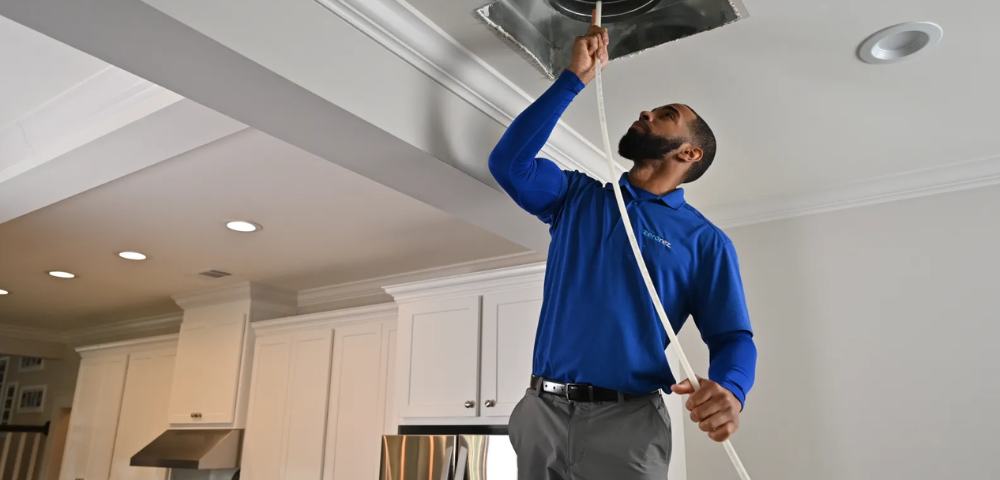
Beyond standard air duct cleaning, air duct sanitizing offers an additional layer of protection for your home’s air. This process aims to eliminate not just dust and debris, but also microbial contaminants that can affect indoor air quality. Understanding what’s involved can help you decide if it’s the right service for your needs.
Key points
- Air duct sanitizing targets microbial contaminants like mold, bacteria, and viruses, in addition to the debris removed during cleaning.
- The process involves thorough cleaning followed by the application of EPA-approved antimicrobial agents.
- UV light installation is an optional, continuous treatment that can be added to enhance sanitization.
- Sanitizing is recommended after water damage, for persistent odors, or for occupants with respiratory issues.
- Sanitizing is distinct from duct repair and duct replacement, which address physical damage to the ductwork.
What is Air Duct Sanitizing?
Air duct sanitizing is a specialized service that goes a step beyond typical air duct cleaning. While cleaning removes accumulated dust, dirt, and other physical particles from your HVAC system’s network of ducts, sanitizing targets airborne contaminants such as mold spores, bacteria, and viruses. The goal is to purify the air circulating through your home, potentially improving respiratory health and reducing odors. This process is often recommended for homes where there’s been a history of mold growth, water damage, or persistent musty smells that regular cleaning hasn’t resolved.
The Air Duct Sanitizing Process
The sanitizing process typically begins with a thorough air duct cleaning. This initial step ensures that all loose debris is removed, creating a clean surface for the sanitizing agents to work on. Professionals use specialized equipment, including powerful vacuums and rotating brushes, to dislodge and extract contaminants from the ductwork. Following the cleaning, a sanitizing agent is applied. This is usually an EPA-approved antimicrobial product. The application method can vary; it might involve fogging or spraying the agent throughout the duct system, ensuring it reaches all interior surfaces. The specific product and application method are chosen to be effective against a broad spectrum of microorganisms while remaining safe for residential use. Some services may also include treatments for the HVAC system components themselves, such as the blower and coils, which can harbor microbial growth. It’s important to note that air duct sanitizing is a professional service; attempting to do it yourself without the proper knowledge and equipment can be ineffective or even harmful.
Optional Treatments: UV Light Installation
A common addition to air duct sanitizing services is the UV light external installation. Ultraviolet (UV) germicidal irradiation systems are installed within the HVAC system, typically near the evaporator coil or within the main return or supply ducts. These lights emit UVC radiation, which is highly effective at neutralizing airborne microorganisms like mold, bacteria, and viruses as they pass through the airstream. Unlike chemical sanitizers that are applied and then dissipate, UV lights provide continuous protection as long as the HVAC system is running. This can be a valuable long-term solution for maintaining a healthier indoor environment, especially for individuals with allergies or compromised immune systems. The installation is performed by trained technicians to ensure the lights are positioned correctly for maximum efficacy and safety.
When to Consider Air Duct Sanitizing
Several situations warrant considering air duct sanitizing. If your home has recently experienced flooding or significant water damage, mold or mildew may have taken root within the ductwork. Persistent musty or unpleasant odors that can’t be traced to other sources are another strong indicator. For households with occupants who suffer from allergies, asthma, or other respiratory conditions, reducing the microbial load in the air can offer significant relief. Even if you’re not experiencing obvious problems, regular air duct cleaning is recommended to maintain indoor air quality. Air duct sanitizing can be a proactive measure to ensure your HVAC system isn’t contributing to airborne contaminants. While dryer vent cleaning is crucial for appliance safety and efficiency, air duct sanitizing addresses the broader air circulation system.
Distinguishing from Cleaning and Repair
It’s important to differentiate air duct sanitizing from air duct cleaning and duct repair or replacement. Air duct cleaning is the foundational service focused on removing physical debris. Sanitizing adds the antimicrobial treatment to kill biological contaminants. Duct repair addresses physical damage to the ductwork, such as leaks, tears, or disconnected sections, which can compromise airflow and energy efficiency. Duct replacement is a more extensive process, involving the complete removal and installation of new ductwork, usually when existing ducts are severely damaged, outdated, or improperly installed. While all these services contribute to a healthy and efficient home, they serve distinct purposes.
Common questions
What is the main difference between air duct cleaning and sanitizing?
Air duct cleaning focuses on removing physical debris like dust and dirt from your ducts, while air duct sanitizing adds an antimicrobial treatment to kill mold, bacteria, and viruses.
Is UV light installation part of standard air duct sanitizing?
UV light installation is typically an optional add-on service to air duct sanitizing, providing continuous germicidal treatment.
When is air duct sanitizing most beneficial?
Air duct sanitizing is most beneficial after water damage or flooding, when dealing with persistent odors, or for households with respiratory sensitivities.
Does air duct sanitizing replace the need for duct repair?
No, air duct sanitizing does not replace the need for duct repair. Repair addresses physical damage to the ducts, while sanitizing targets microbial contaminants.
How often should air ducts be sanitized?
The frequency for air duct sanitizing depends on individual circumstances, such as a history of mold or allergies, but it’s generally less frequent than standard air duct cleaning.